NDIS Occupational Therapy: Eligibility, Funding and What to Expect
Occupational therapy helps you do the everyday things that matter to you — showering, dressing, cooking, getting to work or school, using transport, managing a home. Under the NDIS it is most often funded through Capacity Building – Improved Daily Living, and you generally do not need a GP referral to start. Bloom Healthcare delivers occupational therapy in your home, school and community across Australia. To begin, call 1300 771 465 or make a referral.
Who is eligible for NDIS occupational therapy
To access occupational therapy through the NDIS, you generally need to meet the scheme's access requirements:
- A permanent and significant disability that substantially affects your daily activities and functional capacity
- Aged under 65 at the time of access, in most circumstances
- An Australian resident
- A disability that affects your ability to carry out everyday activities
Meeting the access criteria is only half of it. Occupational therapy also has to be "reasonable and necessary" for you specifically, which means it should:
- help you pursue the goals written in your plan
- reduce the functional impact of your disability
- relate to your disability rather than to general health or lifestyle needs
Whether occupational therapy is funded in your particular plan depends on your goals and your planner's decision. If you are not sure whether your plan covers it, talk to your planner or support coordinator, or call us and we can talk it through.
How occupational therapy is funded
Capacity Building – Improved Daily Living
This is the usual home for occupational therapy. It is designed for therapy, assessment, training and skill development that increases your independence and participation. It typically covers:
- assessment of your daily living needs
- therapy and training in functional skills
- strategies to help you take part at home, at school, at work and in the community
- the reports and recommendations that come out of that work
Capital Supports
Assistive technology and home modifications are funded separately under Capital Supports, and they have their own approval requirements. An occupational therapist does the assessment and writes the evidence that supports the request — but the equipment or modification itself is not paid for out of your therapy budget.
Core Supports
In some plans, Core Supports may fund therapy that maintains or improves day-to-day function. This varies between plans.
Outside the NDIS
Occupational therapy is also accessed through Medicare chronic condition management plans, the Transport Accident Commission for transport accident injuries, private health insurance, and private funding. Aged care participants access it through aged care programs rather than the NDIS — see Aged Care Occupational Therapy.
What occupational therapy includes
Daily living skills
The core of the work. Personal care including showering, toileting, dressing, grooming and sleep routines. Meal planning and preparation, kitchen safety and pacing. Building travel confidence or learning to use public transport. Setting up routines for mornings, afternoons and transitions. Household tasks, simplified systems, and reducing how much you have to rely on other people.
Assistive technology assessment
Equipment and devices that let you do a task more easily or more safely — mobility aids such as walkers and wheelchairs, adaptive tools like modified utensils and computer access devices, communication aids, and sensory regulation tools. The full service covers initial assessment, liaison with suppliers, trialling the equipment, a written report documenting functional impact, and training you to use it.
Home modifications
Assessment of your home to find the barriers and what could change: bathroom safety, access changes to steps, doorways and ramps, kitchen modifications for reach and safety, grab rails and stairlifts.
Functional capacity assessments
A structured evaluation of what you can do and where you need help across daily tasks. It covers initial assessment, liaison with the people involved in your support, report writing and interpretation of the findings. The hours involved are quoted before the work starts.
These assessments are frequently what a plan reassessment turns on, because they describe functional impact in the terms the NDIA is looking for. See Functional Assessment.
Seating, mobility and equipment prescription
Assessment and prescription of mobility aids, seating and positioning, specialised beds, and other customised devices — along with the training and documentation needed to support approval.
Sensory, cognitive and emotional regulation support
Where these affect how you get through a day: sensory processing, executive function, memory, attention, initiation and sequencing of tasks, and emotional regulation as it plays out in real routines.
What sits outside occupational therapy
An occupational therapist assesses cognition as it affects daily tasks — planning, organising and carrying out activities. Formal cognitive assessment using psychometric screening tools, and the psychological interpretation of those results, is psychology work rather than occupational therapy.
Similarly, occupational therapy is not the right starting point for acute pain or post-surgical rehabilitation (physiotherapy), for communication and swallowing (speech pathology), or for behaviours of concern needing a behaviour support plan (positive behaviour support). A good provider will tell you when you need something else first.
How it works, step by step
1. Referral
You can refer yourself — no GP referral is required. Referrals also come from parents and carers, support coordinators, GPs and paediatricians, schools, SIL providers and community teams.
A referral is easier to action if it includes participant details and NDIS number, plan dates and how the plan is managed (self-managed, plan-managed or NDIA-managed), the current goals and the daily life problem you want solved, relevant diagnoses and functional impact, any risks such as falls, choking or carer strain, what supports are in place and what is not working, your preferred setting, and consent and contact details.
2. Service agreement
Before services start, you and Bloom Healthcare sign a service agreement. It sets out the supports being provided, authorised hours and tasks, fees and what is included, travel, cancellation terms, reporting, emergency contacts, and privacy. It is a formal agreement and it has to be signed before delivery and billing begin. Ask for anything in it to be explained before you sign.
3. Initial assessment and goal setting
Your therapist spends time understanding your routines, what is difficult, and what you want to change. Assessment looks across the environments you actually live in — home, school, work, community — rather than only in a clinic room.
4. Therapy sessions
Sessions typically run 45–60 minutes. Frequency depends on your goals and your plan: some people benefit from weekly sessions, others need support monthly or in blocks at particular points in their life. Skill and habit building generally needs a block of sessions plus practice time in between, not one or two appointments.
5. Review and reporting
Progress is tracked against the goals you set, and reporting is prepared for plan reviews and reassessments.
Reports and evidence for plan review
A plan reassessment is largely a documentation exercise, and occupational therapy reports carry a lot of weight in it. A report typically covers your current presentation and functional status, the functional impact of your disability, progress made through therapy, risks and support needs, and recommendations framed in NDIS terms.
Some practical things that help:
- Write goals that describe daily impact — "shower and dress independently" rather than a diagnosis alone
- Link the support to Capacity Building – Improved Daily Living, which is the category built for it
- Collect functional evidence: what is hard now, what the risk is, how much help is needed, what happens without support
- Ask for assessment and implementation, not a one-off report with nothing after it
Occupational therapy by age group
Children 0–9
Foundational skills in natural settings: self-care, fine and gross motor skills, sensory processing, play, emotional regulation and school readiness. The model is family-centred — parents and carers take part in sessions and are coached in activities to continue at home, because that is where most of a child's waking week happens.
For children aged 0–9 with an NDIS plan or a health professional referral, Bloom Healthcare delivers the 360 Kids Early Childhood Approach, a transdisciplinary model combining developmental assessment, speech pathology, occupational therapy, physiotherapy, psychology and positive behaviour support, with dual therapy, parent coaching in natural environments, and a lead clinician coordinating across the team. See Paediatrics 0–9.
Young people 10–17
The focus shifts to independence, participation and identity: executive functioning and organisation, school engagement, life skills such as meal preparation, money management and public transport, emotional regulation and mental health, social participation and self-advocacy, and transition planning — including driving assessments for older teens. Sessions are more teen-led, with parents involved in a way that respects growing autonomy. See Paediatrics 10–17.
Adults
Recovery and rehabilitation after injury or illness, managing chronic conditions, functional capacity assessment, assistive technology and equipment, environmental modification, and maintaining daily living skills at work and in the community.
Older Australians
The emphasis moves toward maintaining independence and safety at home: falls prevention, safer transfers, home modification, energy conservation, and cognitive support for people living with dementia through structured routines and everyday task skills.
How occupational therapy differs from other allied health
The distinction people ask about most is occupational therapy versus physiotherapy. Physiotherapy concentrates on movement, strength and physical recovery — walking, transfers, pain, post-operative rehabilitation, musculoskeletal conditions. Occupational therapy concentrates on the task and the environment: whether you can actually complete the activity, and what would have to change for you to do it.
After a stroke, a physiotherapist may work on regaining walking; an occupational therapist works on independence in the kitchen and bathroom; a speech pathologist addresses communication and swallowing. The three run alongside each other.
Other boundaries in short:
- Exercise physiology — structured, progressive exercise for chronic conditions and long-term capacity, rather than task-level independence
- Speech pathology — communication, speech, language, voice, fluency, and swallowing
- Positive behaviour support — understanding why a behaviour is happening and building a plan across settings
- Dietitian — nutrition, mealtime management and its effect on daily function
Where Bloom Healthcare delivers occupational therapy
Our primary method of service delivery is in the community — home, school, day programs and other everyday settings — because capacity building generally works best in the environment where the skill is actually used. Clinic appointments can be arranged on a case-by-case basis; ask us when you enquire.
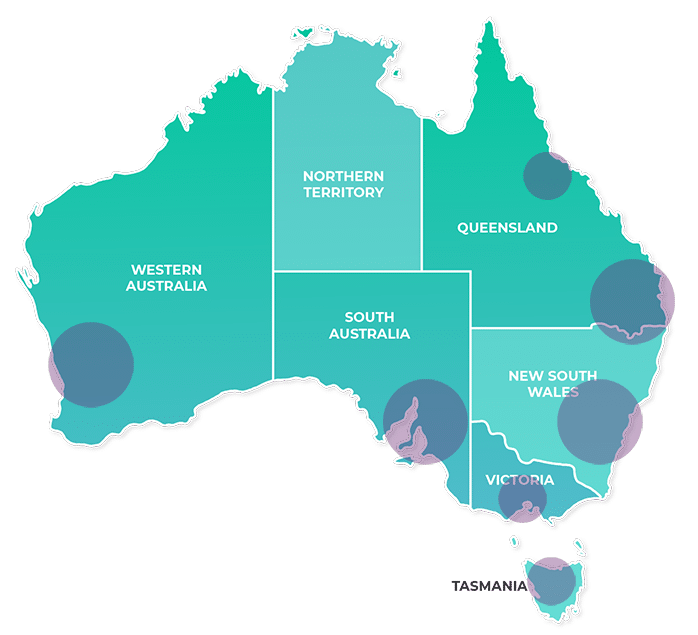
We support clients across New South Wales, South East Queensland, Victoria, Western Australia, South Australia, Tasmania and the Australian Capital Territory. See all locations.
A plain-English guide is available: Download the NDIS & Occupational Therapy Easy Read guide.
Common questions about NDIS occupational therapy
Do I need a GP referral for NDIS occupational therapy?
No. You can refer yourself. Referrals are also accepted from parents and carers, support coordinators, GPs and paediatricians, schools, SIL providers and community teams.
Which part of my NDIS plan pays for occupational therapy?
Usually Capacity Building – Improved Daily Living. Assistive technology and home modifications come from Capital Supports and need their own approval. Some plans fund therapy through Core Supports. If you are unsure what your plan allows, check with your planner or plan manager.
How long is a session and how often will I be seen?
Sessions are typically 45–60 minutes. Frequency depends on your goals and funding — weekly, fortnightly, monthly or in blocks. Building a skill or habit usually takes a block of sessions plus practice in between.
How much does it cost?
Fees, travel and cancellation terms are set out in your service agreement before services start, and are charged within NDIS pricing arrangements. For current pricing for your situation, call 1300 771 465 or see pricing.
Can I be seen at home instead of a clinic?
Yes, and it is our usual approach. Therapy in the setting where you actually perform the task tends to transfer better than clinic-based practice. Clinics can be arranged case by case.
Can occupational therapy help with mental health and sensory processing?
Yes, where these affect your daily function — sensory regulation, emotional regulation, routines and participation. Where you need psychological assessment or therapy specifically, we would involve psychology.
How long before I see progress?
A reasonable question to ask your therapist at the start is what success should look like in 8–12 weeks and how it will be measured. That gives you a checkpoint rather than an open-ended arrangement.
What reports do you provide for my plan review?
Reports covering current function, the functional impact of your disability, progress, risks and support needs, with recommendations written for plan reassessment. Ask for reporting to be included in your service agreement up front.
Can my child and I see other therapists at the same time?
Yes. Occupational therapy is frequently delivered alongside speech pathology, physiotherapy, psychology and positive behaviour support. For children 0–9 this is coordinated through the 360 Kids Early Childhood Approach with a lead clinician.
What if occupational therapy is not the right service for me?
We will tell you. If the presenting issue is acute pain, a communication or swallowing difficulty, or a behaviour of concern, a different discipline should lead — sometimes before occupational therapy is useful at all.
Getting started
Call 1300 771 465, make a referral, or contact us. If you are not yet sure whether occupational therapy is what you need, say so when you call — working that out is part of the conversation.
What occupational therapy services does Bloom Healthcare offer?
Bloom Healthcare offers occupational therapy for NDIS participants and older Australians, including support for daily living skills, assistive technology assessment, home modifications, functional capacity assessment, and seating and mobility equipment prescription.
Where does Bloom Healthcare deliver its occupational therapy services?
Bloom Healthcare delivers occupational therapy in home, school and community settings, and the service is provided across Australia.
Who provides the occupational therapy services described on this page?
The occupational therapy services are provided by Bloom Healthcare, an organisation that can be contacted by telephone at +61 1300 771 465.
What can someone achieve by working with a Bloom Healthcare NDIS occupational therapist?
Working with an experienced NDIS occupational therapist at Bloom Healthcare can help individuals build daily living skills, access assistive technology, and achieve personalised goals.
What is occupational therapy, according to the knowledge base?
Occupational therapy is a person-centered, holistic therapeutic service that helps individuals engage in meaningful activities—or 'occupations'—such as self-care, work, leisure, and community participation, to enhance quality of life and overcome physical, mental, or emotional barriers to independence.
Who can benefit from occupational therapy?
Occupational therapy can benefit individuals with disabilities, people recovering from illness or injury, aging populations experiencing declining mobility or cognitive changes, children with developmental challenges such as delays in fine motor skills or sensory processing issues, and individuals with neurodevelopmental conditions like ADHD and autism.
Does Bloom Healthcare's occupational therapy service include functional capacity assessments?
Yes, Bloom Healthcare's occupational therapy service includes functional capacity assessment as one of its offerings for NDIS participants and older Australians.
Does Bloom Healthcare help with home modifications through occupational therapy?
Yes, home modifications are one of the occupational therapy services Bloom Healthcare provides to NDIS participants and older Australians.
Images on This Page
-
https://bloom-healthcare.com.au/wp-content/uploads/2026/08/bloom-logo.webp
Bloom Healthcare
-
https://bloom-healthcare.com.au/wp-content/plugins/widget-google-reviews/assets/img/gmblogo.svg
Bloom Healthcare place picture
-
https://bloom-healthcare.com.au/wp-content/uploads/2025/01/occupational-therapy-support.jpg
NDIS occupational therapy<br />
-
https://bloom-healthcare.com.au/wp-content/uploads/2025/08/team.png
Experienced Team
-
https://bloom-healthcare.com.au/wp-content/uploads/2025/08/access.png
Fast NDIS access
-
https://bloom-healthcare.com.au/wp-content/uploads/2025/08/location.png
Australia-wide support
-
https://bloom-healthcare.com.au/wp-content/uploads/2025/08/tailored.png
Personalised NDIS plans
-
data:image/svg+xml,%3Csvg%20xmlns='http://www.w3.org/2000/svg'%20viewBox='0%200%2065%2064'%3E%3C/svg%3E
Falls prevention support
-
https://bloom-healthcare.com.au/wp-content/uploads/2025/08/listen.png
Falls prevention support
-
https://bloom-healthcare.com.au/wp-content/uploads/2025/08/build.png
Build your care plan
-
https://bloom-healthcare.com.au/wp-content/uploads/2025/08/support.png
Hands-on support care
-
data:image/svg+xml,%3Csvg%20xmlns='http://www.w3.org/2000/svg'%20viewBox='0%200%201200%20800'%3E%3C/svg%3E
Discover how Occupational Therapy helps people with ADHD manage focus, routines and emotions. Discover Bloom Healthcare's expert, NDIS-supported care services
-
https://bloom-healthcare.com.au/wp-content/uploads/2025/07/portrait-smiling-young-woman-scaled.jpg
Discover how Occupational Therapy helps people with ADHD manage focus, routines and emotions. Discover Bloom Healthcare's expert, NDIS-supported care services
-
data:image/svg+xml,%3Csvg%20xmlns='http://www.w3.org/2000/svg'%20viewBox='0%200%2041%2040'%3E%3C/svg%3E
Assistive Technology
-
https://bloom-healthcare.com.au/wp-content/uploads/2025/08/Blurb2-AssistiveTech.png
Assistive Technology
-
https://bloom-healthcare.com.au/wp-content/uploads/2025/08/Blurb2-HomeModifications.png
Home Modifications
-
https://bloom-healthcare.com.au/wp-content/uploads/2025/08/Blurb2-NDISreports.png
NDIS Reports
-
data:image/svg+xml,%3Csvg%20xmlns='http://www.w3.org/2000/svg'%20viewBox='0%200%2021%2016'%3E%3C/svg%3E
Beds and Matresses
-
https://bloom-healthcare.com.au/wp-content/uploads/2025/08/BedsMattresses.png
Beds and Matresses
-
data:image/svg+xml,%3Csvg%20xmlns='http://www.w3.org/2000/svg'%20viewBox='0%200%2017%2016'%3E%3C/svg%3E
Hoist and Sling
-
https://bloom-healthcare.com.au/wp-content/uploads/2025/08/HoistSling.png
Hoist and Sling
-
data:image/svg+xml,%3Csvg%20xmlns='http://www.w3.org/2000/svg'%20viewBox='0%200%2013%2016'%3E%3C/svg%3E
SDA and SIL
-
https://bloom-healthcare.com.au/wp-content/uploads/2025/08/SDASIL.png
SDA and SIL
-
https://bloom-healthcare.com.au/wp-content/uploads/2025/08/Blurb2-FunctionalCapacity.png
Functional Capacity
-
https://bloom-healthcare.com.au/wp-content/uploads/2025/08/Blurb2-DailyLivingSkills.png
Daily Living Skills
-
https://bloom-healthcare.com.au/wp-content/uploads/2025/08/Blurb2-CognitiveAssessments.png
Cognitive Assessments
-
https://bloom-healthcare.com.au/wp-content/uploads/2025/08/ShowerChairs.png
Shower Chairs
-
https://bloom-healthcare.com.au/wp-content/uploads/2025/08/StrokeTherapies.png
Stroke Therapies
-
data:image/svg+xml,%3Csvg%20xmlns='http://www.w3.org/2000/svg'%20viewBox='0%200%20698%20635'%3E%3C/svg%3E
NDIS coverage map
-
https://bloom-healthcare.com.au/wp-content/uploads/2026/03/bloom-map-2026-1.png
NDIS coverage map
-
data:image/svg+xml,%3Csvg%20xmlns='http://www.w3.org/2000/svg'%20viewBox='0%200%20325%20264'%3E%3C/svg%3E
easy read guide
-
https://bloom-healthcare.com.au/wp-content/uploads/2025/08/easy-reads-large.png
easy read guide
-
https://bloom-healthcare.com.au/wp-content/uploads/2025/08/bloom-logo-white.png
(no alt text)
-
data:image/svg+xml,%3Csvg%20xmlns='http://www.w3.org/2000/svg'%20viewBox='0%200%2016%2016'%3E%3C/svg%3E
(no alt text)
-
https://bloom-healthcare.com.au/wp-content/uploads/2025/08/Phone-Frame.png
(no alt text)
-
https://bloom-healthcare.com.au/wp-content/uploads/2025/08/Email-Frame.png
(no alt text)
-
https://bloom-healthcare.com.au/wp-content/uploads/2025/08/Clock-Frame.png
(no alt text)
-
https://bloom-healthcare.com.au/wp-content/uploads/2025/08/connect-facebook.png
(no alt text)
-
https://bloom-healthcare.com.au/wp-content/uploads/2025/08/connect-instagram.png
(no alt text)
-
https://bloom-healthcare.com.au/wp-content/uploads/2025/08/connect-linkedin.png
(no alt text)
-
data:image/svg+xml,%3Csvg%20xmlns='http://www.w3.org/2000/svg'%20viewBox='0%200%20300%20144'%3E%3C/svg%3E
(no alt text)
-
https://bloom-healthcare.com.au/wp-content/uploads/2026/06/We-heart-NDIS-Registered-provider-logo-small-300x144.png
(no alt text)
-
https://bloom-healthcare.com.au/wp-content/uploads/2025/08/Accessibility-Frame.png
(no alt text)