How is exercise physiology funded under the NDIS, and what has to be in your plan?
Exercise physiology is funded from the Capacity Building budget in an NDIS plan. Depending on the goal it sits under Improved Health and Wellbeing or Improved Daily Living, and it is explicitly recognised in the NDIS Pricing Arrangements and Price Limits. You do not usually need a specific line item for it unless your Capacity Building budget is made up of stated supports for another service. What you do need is a clear link between your disability, the exercise program and a goal in your plan. Call 1300 771 465 or make a referral to start.
This section goes into the clinical and funding detail the page above does not: what makes a request fundable, what the assessment actually measures, how the program progresses, and what evidence your exercise physiologist produces for plan reassessment. If you are looking for how exercise physiology helps with a specific long-term condition, see exercise physiology for chronic condition management.
Who qualifies
To access NDIS funding at all you need to meet the scheme's access criteria: a permanent and significant disability, and entry to the scheme before 65. From there, exercise physiology has to meet the reasonable and necessary test, which means it must connect to disability-related goals written into your plan.
The practical test the NDIA applies is straightforward. If the exercise program helps you do everyday life more safely or more independently, it is easier to justify. If it is general fitness with no clear disability-related goal, it is harder to justify.
Exercise physiology tends to be the right fit when your goal falls into one of these areas:
Mobility and balance. Walking tolerance, safer transfers such as bed to chair or sit to stand, reducing falls risk through balance and strength work, improving motor skills through structured movement.
Strength, posture and movement control. Lower limb strength for stairs and getting up off the floor, core stability for sitting balance and confidence, resistance training to improve mobility and quality of life.
Endurance and community participation. Stamina for shopping, appointments, a school day or a work shift, and pacing so your energy lasts across the day.
Pain and fatigue management. Graded activity to avoid boom and bust cycles, strategies for flare-ups, building a routine you can hold.
Daily living and independence. Standing long enough to prepare a meal safely, dressing with less help, doing everyday tasks with more confidence.
Psychosocial wellbeing. Where it is disability-related and coordinated with psychology or counselling, exercise supports routine, motivation, sleep and self-efficacy.
Who delivers it
An Accredited Exercise Physiologist is a university-trained allied health professional, usually four to five years of study, accredited by Exercise and Sports Science Australia. Their training covers anatomy, physiology and pathology, and they are qualified to prescribe clinical exercise, run functional assessments and design individual programs for people with complex health needs.
That is a different qualification from a personal trainer, who typically holds a Certificate III or IV in fitness aimed at lifestyle exercise advice for generally healthy people.
| Accredited Exercise Physiologist | Personal trainer | |
|---|---|---|
| Qualification | University degree accredited by ESSA | Certificate III or IV in fitness |
| Position | Allied health professional inside the healthcare system | Outside clinical healthcare frameworks |
| Focus | Clinical management of health conditions through evidence-based exercise prescription | General fitness, strength and weight |
| Assessment | Comprehensive health assessment and exercise testing before starting | Often minimal or skipped |
| Programs | Individualised, condition-specific, reviewed and adjusted | Generalised or one-size-fits-all |
| Complex needs | Designed for high-risk and complex health situations | Not suitable for many chronic conditions |
| Funding | NDIS, Medicare, DVA and WorkCover | Private payment only |
| Team | Works with GPs, occupational therapists, physiotherapists and support coordinators | Usually works independently |
This distinction is why a gym membership is not an NDIS-fundable substitute for exercise physiology, and why the NDIS treats them differently.
What the NDIS will and will not fund
Funded: individualised, evidence-based exercise prescription tied to disability-related goals, functional assessment, program design and progression, education so you can carry the program on yourself, and reporting for plan reassessment.
Not funded: general gym memberships, personal training, and general fitness programs with no clear link to a disability-related functional outcome.
The boundary is the goal, not the activity. The same set of exercises can be fundable for one participant and not for another, depending on whether it is doing identifiable work against a plan goal.
Costs
Plan-managed and NDIA-managed participants are covered by the NDIS Pricing Arrangements and Price Limits, which set the maximum rate and the rules for claiming travel and non-face-to-face work such as report writing. The rates, travel arrangements and cancellation terms that apply to you are set out in the service agreement you sign before the program starts. Ask for them in writing during intake, or call 1300 771 465.
What happens in the assessment
The first appointment is a clinical assessment, not a workout.
Your exercise physiologist will:
- take a health history, covering your diagnosis, current supports, medications and relevant medical background
- work through your NDIS goals and what matters in your day-to-day life
- assess functional movement, including strength, balance, endurance, gait and posture
- identify the barriers to exercise: pain, fatigue, confidence, sensory factors, the physical environment
- run a safety assessment to confirm you are safe to exercise, and request GP approval where that is needed before starting
- take baseline measures, so progress can be shown later rather than asserted
- agree the starting plan with you and set out what progress will look like
Risk assessment is part of this. It covers falls, seizures, behavioural considerations, communication needs, family history and any external factors affecting safety, and it shapes the program that follows. Psychosocial screening is also part of a full assessment, because psychological and social factors change what a program can realistically achieve.
Goals are written as SMART goals so they can be measured.
The baseline measures that matter
The measures chosen depend on the goal. Common ones are time, distance, confidence ratings, symptom and pain scores, balance tests and leg strength markers.
| Goal | What gets measured |
|---|---|
| Stand to prepare meals safely | Time standing at the bench, number of rest breaks, confidence rating, pain rating after the activity |
| Walk to the local shop and back safely | Distance, gait aid use, balance confidence, number of stops |
| Reduce falls risk at home | Balance tests, leg strength markers, number of near-misses, confidence with transfers |
| Manage a work or study day | Adherence to the pacing plan, energy levels at key times, recovery time after activity |
Those numbers are what your plan reassessment report is later built on, which is why the first appointment matters more than it looks.
How the program progresses
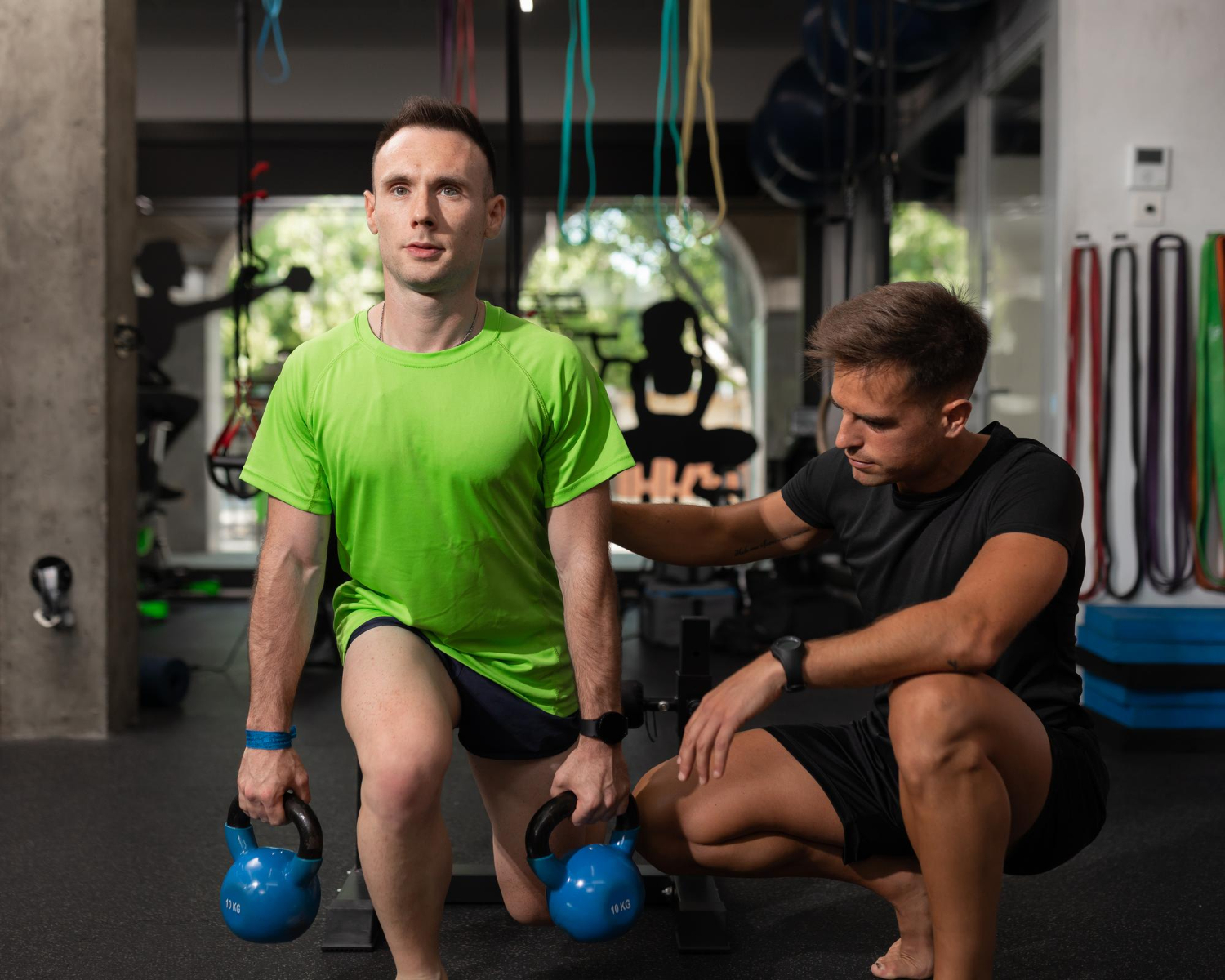
Early sessions put the plan into practice. Exercises are matched to your ability and to the equipment you can actually get to. You work on pacing and fatigue management, practise movement for real tasks such as stairs, transfers and getting up from the floor, and learn safe technique so you can manage between sessions.
Ongoing sessions increase load and complexity gradually, build independence so you need less direct supervision, integrate the routine into home, school, work or the community, and coordinate with your other clinicians where that is needed.
The home program is the part that does most of the work. It is a set of exercises and activities you carry out between appointments, with clear instructions, pacing strategies, practice for real-world tasks and education on safe technique. Your exercise physiologist reviews and adjusts it so it stays realistic. Long-term gains come from what happens between sessions, not in them.
Frequency is not fixed. Sessions are usually more frequent early on, particularly in an acute recovery phase, and become less frequent as you build self-management. The right schedule depends on your condition, your progress and the funding in your plan, and it is set after assessment.
Settings. Sessions can run at home, at school where that is agreed, in the community such as a park or a local walking route, in a clinic or gym, or by telehealth for coaching, review and program updates. Bloom's primary delivery model is in the community, with clinics available case by case.
Evidence and reporting
The NDIA's guidance on therapy supports is explicit that a therapy plan should show how goals and outcomes will be measured, and that progress may be required at plan reassessment. For exercise physiology that means:
- progress letters during the plan period
- a final treatment or progress report that tracks outcome measures against the baseline
- a report for plan reassessment explaining the approach and evidencing what changed
A report that holds up at reassessment shows:
- your goals, in the plan's own wording where possible, and the functional impact of your disability day to day
- what was assessed and what the findings mean functionally
- what has been tried and what worked or did not
- measurable outcomes with a baseline and a target
- the recommended frequency and focus of ongoing support, tied to goals
- how the program is building independence or reducing reliance on other supports
Outcome measures are the point. They give objective evidence of clinical benefit, which is what informs whether a support continues, changes or stops. Session notes should also track exercise progression, your adherence to the between-session work, changes in functional capacity, and the environmental factors affecting performance.
Keep every report and give copies to your support coordinator and plan manager.
Exercise physiology or physiotherapy?
Both improve functional capacity and both use active movement. The difference is method and time horizon.
Exercise physiology is about long-term capacity built through a structured, progressive movement plan. It works on endurance, strength, confidence, participation and routine. It does not involve hands-on manual therapy.
Physiotherapy leans towards injury recovery and rehabilitation, and can include manual techniques, passive therapies and fine motor work. It focuses on assessment, movement quality, pain and injury management, and mobility and transfer safety.
Choose physiotherapy when passive therapy is what is needed, for example where someone is bed-bound with little motor control, when fine motor movement is the focus, when hands-on treatment is needed for pain or mobility, or when you are recovering from an acute injury.
Choose exercise physiology when you need a progressive program that builds capacity over months, when the goal is endurance, strength, confidence and routine, when you are managing a chronic condition, or when you need pacing strategies for fatigue and pain.
You can have both. They work well together in a coordinated team, with physiotherapy handling assessment, movement quality, pain and hands-on work while exercise physiology handles structured conditioning and capacity building. What funders look for is that the two are coordinated rather than duplicating each other, so make sure each discipline is clearly assigned to specific goals in your plan and that the clinicians are talking to each other. Discuss the mix with your support coordinator before booking both.
Easy read
A plain-English guide is available on this page: Download the NDIS and Exercise Physiology guide. It is useful for support workers and family members who will help with the home program.
Common questions about NDIS exercise physiology
Which part of my plan pays for it?
Capacity Building, under either Improved Health and Wellbeing or Improved Daily Living, depending on whether the goal is health-focused or focused on function and independence. You usually do not need a separate line item unless your Capacity Building budget is made up of stated supports for another service. Check your plan or ask your plan manager.
Will the NDIS pay for my gym membership?
No. General gym memberships, personal training and general fitness programs are not funded. What is funded is the accredited exercise physiologist's assessment, prescription, supervision and reporting, where it is tied to a disability-related goal.
Do I need a GP referral?
Not to start NDIS-funded exercise physiology. You, a carer, a support coordinator or a health professional can refer directly. Your exercise physiologist may request GP approval before exercise begins if the safety assessment indicates it, and may recommend a medical review first in some cases.
What qualification should my exercise physiologist hold?
Accreditation with Exercise and Sports Science Australia. An Accredited Exercise Physiologist is university trained across anatomy, physiology and pathology and is an allied health professional, which is a different thing from a Certificate III or IV personal trainer.
What happens in the first appointment?
Health history, goals, a functional movement assessment covering strength, balance, endurance, gait and posture, identification of barriers, a safety assessment, baseline measures, and an agreed starting plan. It is an assessment session, not a training session.
How often will I have sessions?
There is no standard. Frequency is usually higher early on and reduces as you build independence and self-management. It is set after assessment based on your condition, your progress and the funding in your plan.
Do the sessions have to be in a gym?
No. Home, school, community settings such as a park or walking route, a clinic or gym, and telehealth for coaching and program review are all used. Community delivery is Bloom's primary model, with clinics available case by case.
What is the home program and do I have to do it?
It is the set of exercises and activities you do between sessions, and it is where most of the progress comes from. It comes with instructions, pacing strategies and safe technique guidance, and it gets reviewed and adjusted so it stays realistic for you.
Can I have exercise physiology and physiotherapy at the same time?
Yes, and they often work well together. Keep the roles distinct: physiotherapy for assessment, movement quality, pain and hands-on work, exercise physiology for structured conditioning and capacity. Coordinate them so the two are not doing the same job, and set that out in your plan.
What report will I get for my plan reassessment?
Progress letters during the plan period and a report at reassessment that explains the approach, sets out baseline and current outcome measures, shows functional change, and recommends the frequency and focus of ongoing support tied to your goals.
How is progress actually measured?
With concrete numbers matched to your goal: time standing, distance walked, gait aid use, number of rest breaks or stops, balance test results, leg strength markers, confidence ratings, and pain or fatigue scores before and after activity.
Can I get exercise physiology if I am not on the NDIS?
Exercise physiology is also funded through Medicare, DVA and WorkCover pathways, each with their own referral and eligibility rules. Call 1300 771 465 to talk through what applies to your situation.
How do I start?
Make a referral, use the contact form, or call 1300 771 465. Have your NDIS number, plan dates, plan management type, plan goals and any recent medical reports ready.
What Exercise Physiology service does Bloom Healthcare offer for NDIS participants?
Bloom Healthcare offers an accredited exercise physiology service that helps NDIS participants build strength and independence through exercise tailored to their unique capacity and disability.
Who provides Bloom Healthcare's exercise physiology services?
Bloom Healthcare's exercise physiology services are delivered by an accredited exercise physiologist NDIS team.
What conditions does Bloom Healthcare's exercise physiology program address?
The program supports chronic condition management, neurological conditions, strength and endurance, falls prevention, and functional capacity for NDIS participants and older Australians.
Where are Bloom Healthcare's exercise physiology services delivered?
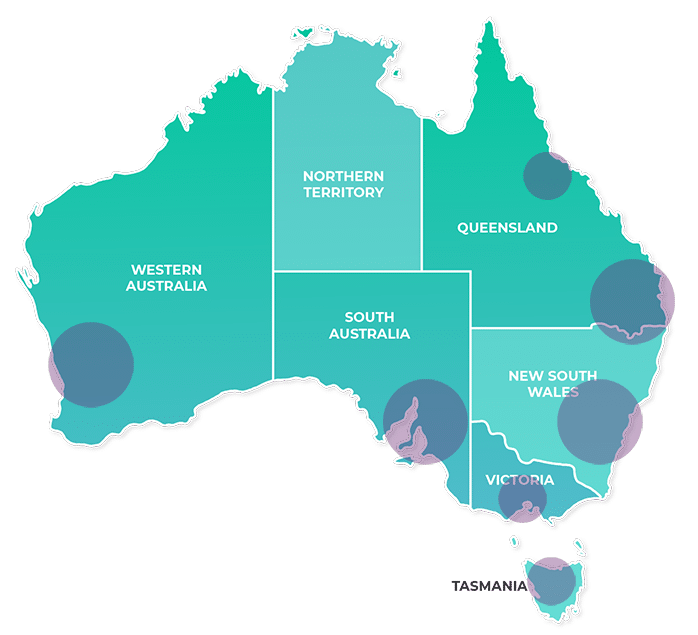
Services are delivered in home and community settings across Australia.
What is the nature of the exercise programs used in Bloom Healthcare's exercise physiology service?
The service uses structured, progressive exercise programs tailored to each individual's capacity and disability.
What is the phone number for Bloom Healthcare?
Bloom Healthcare can be reached at +61 1300 771 465.
What is exercise physiology according to the knowledge base?
Exercise physiology is the study of how the body responds and adapts to physical activity, and clinically it applies this knowledge to prevent, manage, and treat various chronic health conditions through carefully prescribed exercise programs.
What areas do Accredited Exercise Physiologists (AEPs) work across?
AEPs are university-trained professionals who work across cardiovascular and respiratory health, musculoskeletal rehabilitation, neurological and developmental conditions, mental health and wellbeing, injury recovery and fall prevention, and strength, balance, and mobility training.
What mental health benefits can exercise physiology provide for individuals with disabilities?
Exercise physiology can reduce stress and anxiety, improve mood and self-esteem, and enhance social interaction and community participation for individuals with disabilities.
How does exercise physiology improve functional independence?
Exercise physiology improves functional independence by enhancing strength, mobility, and overall fitness, enabling individuals to perform daily activities more easily and with greater confidence, which reduces fall risk and increases overall independence.
Images on This Page
-
https://bloom-healthcare.com.au/wp-content/uploads/2026/08/bloom-logo.webp
Bloom Healthcare
-
https://bloom-healthcare.com.au/wp-content/plugins/widget-google-reviews/assets/img/gmblogo.svg
Bloom Healthcare place picture
-
https://bloom-healthcare.com.au/wp-content/uploads/2026/04/ndis-fitball-physiotherapy-exercise.jpg
NDIS exercise physiology
-
https://bloom-healthcare.com.au/wp-content/uploads/2025/08/team.png
Experienced Team
-
https://bloom-healthcare.com.au/wp-content/uploads/2025/08/access.png
Fast NDIS access
-
https://bloom-healthcare.com.au/wp-content/uploads/2025/08/location.png
Australia-wide support
-
https://bloom-healthcare.com.au/wp-content/uploads/2025/08/tailored.png
Personalised NDIS plans
-
data:image/svg+xml,%3Csvg%20xmlns='http://www.w3.org/2000/svg'%20viewBox='0%200%2065%2064'%3E%3C/svg%3E
Falls prevention support
-
https://bloom-healthcare.com.au/wp-content/uploads/2025/08/listen.png
Falls prevention support
-
https://bloom-healthcare.com.au/wp-content/uploads/2025/08/build.png
Build your care plan
-
https://bloom-healthcare.com.au/wp-content/uploads/2025/08/support.png
Hands-on support care
-
data:image/svg+xml,%3Csvg%20xmlns='http://www.w3.org/2000/svg'%20viewBox='0%200%201200%20960'%3E%3C/svg%3E
What Makes Exercise Physiology Different from a Gym Program?
-
https://bloom-healthcare.com.au/wp-content/uploads/2025/07/333.jpg
What Makes Exercise Physiology Different from a Gym Program?
-
data:image/svg+xml,%3Csvg%20xmlns='http://www.w3.org/2000/svg'%20viewBox='0%200%2041%2040'%3E%3C/svg%3E
Assistive Technology
-
https://bloom-healthcare.com.au/wp-content/uploads/2025/08/Blurb2-AssistiveTech.png
Assistive Technology
-
https://bloom-healthcare.com.au/wp-content/uploads/2025/08/Blurb2-HomeModifications.png
Home Modifications
-
https://bloom-healthcare.com.au/wp-content/uploads/2025/08/Blurb2-NDISreports.png
NDIS Reports
-
data:image/svg+xml,%3Csvg%20xmlns='http://www.w3.org/2000/svg'%20viewBox='0%200%2021%2016'%3E%3C/svg%3E
Beds and Matresses
-
https://bloom-healthcare.com.au/wp-content/uploads/2025/08/BedsMattresses.png
Beds and Matresses
-
data:image/svg+xml,%3Csvg%20xmlns='http://www.w3.org/2000/svg'%20viewBox='0%200%2017%2016'%3E%3C/svg%3E
Hoist and Sling
-
https://bloom-healthcare.com.au/wp-content/uploads/2025/08/HoistSling.png
Hoist and Sling
-
https://bloom-healthcare.com.au/wp-content/uploads/2025/08/Blurb2-FunctionalCapacity.png
Functional Capacity
-
https://bloom-healthcare.com.au/wp-content/uploads/2025/08/Blurb2-DailyLivingSkills.png
Daily Living Skills
-
https://bloom-healthcare.com.au/wp-content/uploads/2025/08/Blurb2-CognitiveAssessments.png
Cognitive Assessments
-
https://bloom-healthcare.com.au/wp-content/uploads/2025/08/ShowerChairs.png
Shower Chairs
-
https://bloom-healthcare.com.au/wp-content/uploads/2025/08/StrokeTherapies.png
Stroke Therapies
-
data:image/svg+xml,%3Csvg%20xmlns='http://www.w3.org/2000/svg'%20viewBox='0%200%20698%20635'%3E%3C/svg%3E
NDIS coverage map
-
https://bloom-healthcare.com.au/wp-content/uploads/2026/03/bloom-map-2026-1.png
NDIS coverage map
-
data:image/svg+xml,%3Csvg%20xmlns='http://www.w3.org/2000/svg'%20viewBox='0%200%20325%20264'%3E%3C/svg%3E
easy read guide
-
https://bloom-healthcare.com.au/wp-content/uploads/2025/08/easy-reads-large.png
easy read guide
-
https://bloom-healthcare.com.au/wp-content/uploads/2025/08/bloom-logo-white.png
(no alt text)
-
data:image/svg+xml,%3Csvg%20xmlns='http://www.w3.org/2000/svg'%20viewBox='0%200%2016%2016'%3E%3C/svg%3E
(no alt text)
-
https://bloom-healthcare.com.au/wp-content/uploads/2025/08/Phone-Frame.png
(no alt text)
-
https://bloom-healthcare.com.au/wp-content/uploads/2025/08/Email-Frame.png
(no alt text)
-
https://bloom-healthcare.com.au/wp-content/uploads/2025/08/Clock-Frame.png
(no alt text)
-
https://bloom-healthcare.com.au/wp-content/uploads/2025/08/connect-facebook.png
(no alt text)
-
https://bloom-healthcare.com.au/wp-content/uploads/2025/08/connect-instagram.png
(no alt text)
-
https://bloom-healthcare.com.au/wp-content/uploads/2025/08/connect-linkedin.png
(no alt text)
-
data:image/svg+xml,%3Csvg%20xmlns='http://www.w3.org/2000/svg'%20viewBox='0%200%20300%20144'%3E%3C/svg%3E
(no alt text)
-
https://bloom-healthcare.com.au/wp-content/uploads/2026/06/We-heart-NDIS-Registered-provider-logo-small-300x144.png
(no alt text)
-
https://bloom-healthcare.com.au/wp-content/uploads/2025/08/Accessibility-Frame.png
(no alt text)