NDIS and aged care allied health in New South Wales: who can get it, who pays, and how to start
Bloom Healthcare is a registered NDIS provider delivering mobile allied health across Sydney and regional New South Wales. Therapy is delivered where you already spend your time, which is usually your home, your school, your day program or somewhere in your community, with telehealth available as well. Most therapy for NDIS participants is paid from the Capacity Building part of your plan, most often Improved Daily Living. If you are over 65 and looking for help at home, that is a different scheme with a different door: My Aged Care and the Support at Home program, not the NDIS. To check availability in your suburb or start a referral, call 1300 771 465 or email hello@bloom-healthcare.com.au.
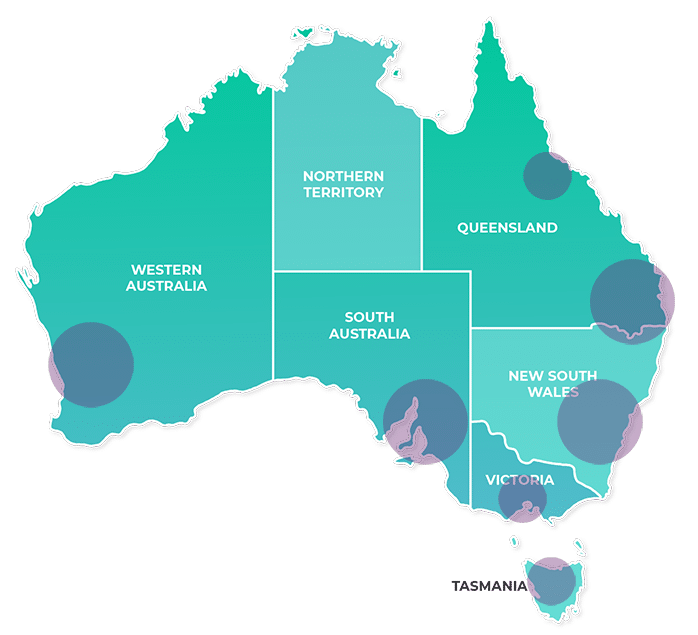
Where Bloom Healthcare works in New South Wales
These are the NSW areas listed on this page. They are the areas to ask about first.
Greater Sydney
- Sydney CBD
- Parramatta
- Liverpool
- Campbelltown
- Penrith
- Hornsby
- Northern Beaches
Regional and coastal NSW
- Newcastle
- Central Coast, including Gosford
- Wollongong
- Tweed Heads
- Byron Bay
Because the service is mobile rather than clinic-based, coverage works as a travel radius around where clinicians live and work, not as a shopfront you visit. Suburbs next to the ones listed above are often reachable, and suburbs a long way from them may not be.
If your suburb is not on that list
Do not assume the answer is no, and do not assume it is yes. Availability changes by discipline and by area, so a speech pathologist may be available in a town where an exercise physiologist is not. Ring 1300 771 465 with your suburb and the discipline you need and ask directly. If nobody can travel to you, telehealth is often the practical alternative, particularly for regional NSW.
This page does not list clinic addresses because Bloom's model is mobile and community-based. Clinic appointments are considered case by case rather than offered as standard.
How therapy is actually delivered across NSW
Bloom's stated primary method of service delivery is in the community, meaning home, school, day programs and similar settings. In practice that looks like this.
In your home
A clinician travels to you. Home sessions let an occupational therapist see your actual kitchen, bathroom and steps, let a physiotherapist watch you move through your real house, and remove the travel burden entirely. For older people and people with mobility or fatigue issues, this is usually the least tiring option. Before any home visit, Bloom completes a risk management plan based on the information you give at intake, so that both you and the clinician are safe.
At school or in early childhood settings
For school-age children, clinicians can work inside the school day. That includes assessing what is getting in the way of learning and taking part, training teachers and support staff in strategies that work for that child, and running joint sessions with teachers so the approach carries on when the therapist is not there. Parents get regular updates and coaching so the same strategies run at home.
School attendance always needs the school's agreement as well as yours. NDIS funding is national and does not change from state to state, but school systems are run by the states, and individual NSW schools differ in how they prefer outside therapists to work on site. Ask the school early. If on-site sessions are not possible, sessions can run at home after school, or by telehealth.
For children aged 0 to 9, the early childhood approach is family-centred and capacity-building. A key worker coordinates access to the different therapies and helps translate them into things you can do inside ordinary daily routines, in the settings the child already uses such as daycare or preschool.
In the community and at day programs
Sessions can run in the places where a goal actually lives: a shopping centre, public transport, a workplace, a sporting club, a community centre or a day program. Community participation support is about building the capacity to take part in local life, whether that is a sporting event, the cinema or volunteering.
Telehealth
Telehealth is available across the disciplines and is useful when distance, transport, illness or anxiety makes an in-person session hard. It matters most for participants outside the metropolitan areas. Some assessments can be done by telehealth and some cannot, so ask when you book.
Who is eligible
NDIS
Eligibility is set by the NDIA, not by Bloom, and it is the same rule in every state. To meet the access requirements you generally need to:
- be under 65 when you apply
- be an Australian citizen, a permanent resident, or hold a Protected Special Category Visa
- have a disability that is both permanent and significant
The NDIS looks at the functional impact of your condition rather than the diagnosis by itself. Two people with the same diagnosis can get very different outcomes because the scheme is asking what you can and cannot do. Evidence is usually assessed across six areas: self-care, self-management, mobility, learning, communication and social functioning.
For children under 6, there is more flexibility. A child with developmental delay may be able to get support through the NDIS early childhood approach without a formal diagnosis, provided the residency and NDIS Act requirements are met.
To apply, contact the NDIA on 1800 800 110 and ask for an Access Request Form, then submit it with your supporting evidence. Families of young children can also go through an Early Childhood Partner. Decisions are made by the NDIA. If you are knocked back, you have the right to ask for a review.
Aged care is a separate scheme
If you are older and want help staying safe at home, the NDIS is not your pathway. Support at Home is the Australian Government aged care program that started on 1 November 2025, replacing the Home Care Packages Program and the Short-Term Restorative Care Programme. The steps are:
- Register with My Aged Care, the government's single entry point, online or by phone.
- My Aged Care refers you for an aged care assessment, through ACAT or RAS depending on your needs.
- If you are approved, you receive a support plan setting out the services and funding you have been approved for.
- You choose your providers, and Bloom can be one of them.
Allied health under Support at Home sits under Clinical Supports, which covers occupational therapy, physiotherapy, exercise physiology, speech pathology, and psychology and counselling. Aged care allied health can be delivered at home, in the community or by telehealth where that is appropriate.
The two schemes have different age gates, different assessors, different funding rules and different regulators. Support at Home providers work under the Aged Care Quality and Safety Commission. NDIS providers are registered through the NDIS system. Do not plan on the basis that one will roll into the other.
Which funding pays for therapy
For NDIS participants, allied health therapy is funded from Capacity Building. The subcategory used most often is Improved Daily Living, which covers assessment, training and therapy aimed at increasing skills, independence and community participation. Depending on your goals, some supports may sit under Improved Health and Wellbeing, and psychology or behaviour support may sit under Improved Relationships. An initial assessment is typically covered under Improved Daily Living.
How you book and pay depends on how your plan is managed:
- NDIA-managed. You must use NDIS registered providers. The provider claims directly through the NDIS portal.
- Plan-managed. You can use registered and unregistered providers. The provider invoices your plan manager, who pays.
- Self-managed. You can use any suitable provider that meets NDIS rules. You pay the invoice and claim it back.
Bloom works across all three arrangements. Providers must charge in line with the NDIS Pricing Arrangements and Price Limits.
Fees, travel and cancellations
Rates, allocated hours for therapy, reports and travel, invoicing arrangements, and the cancellation and rescheduling terms are all set out in your written service agreement before services start, and they follow the NDIS Pricing Arrangements. This page does not publish figures, because your agreement is the document that binds. Ask for those specifics on 1300 771 465 or at hello@bloom-healthcare.com.au before you sign.
What to expect, step by step
- Referral. You can refer yourself, or a GP, paediatrician, support coordinator or another health professional can refer you. Use the referral form or contact the team.
- Welcome pack and intake form. The admin team sends a welcome pack with an intake form. This has to be completed before the first appointment can be booked. It collects the background a clinician needs and starts the safety check.
- Risk management plan. Managers review what you have provided and complete a risk management plan before home visiting arrangements are finalised.
- Service agreement. A written agreement is signed by both sides before services and billing begin. It covers fees and inclusions, allocated hours, travel, invoicing, cancellation and rescheduling, privacy and consent, and your rights and responsibilities.
- Clinician contact. Your primary clinician gets in touch, usually within 24 hours of intake, to introduce themselves, go through the intake form with you and book the first appointment.
- Initial assessment. The clinician looks at your strengths, challenges and history, reviews any existing reports, discusses your medical history, works through your top three goals and observes functional abilities. A treatment plan is then built with you.
- Ongoing sessions and review. Progress is tracked, reported and adjusted against your goals.
Session frequency and duration are not fixed. They depend on your goals, your funding and clinical need, so agree them with your clinician rather than assuming a standard schedule.
Assessments and reports, and what they are for
A Functional Capacity Assessment is a structured evaluation of what you can do across the domains of everyday life: physical abilities, cognitive and emotional functioning, communication, self-care, social and community participation, mobility, and daily living tasks. It can also cover environmental factors and assistive technology needs. It is broader than a standard occupational therapy assessment because it takes in physical and cognitive tasks as well as activities of daily living.
An FCA is commonly used by people applying to the NDIS for the first time, by new participants establishing a baseline, and by participants heading into a plan reassessment, particularly where circumstances have changed after an injury, a medical event or an improvement in capacity.
The report you receive covers a summary of findings, identified support needs, tailored recommendations for services and supports, assistive technology suggestions and practical strategies for working toward your goals. It is the evidence that helps justify funding for the services, therapies or equipment you need.
Alongside assessment reports, Bloom produces progress reports and plan reassessment reports. Those set out your current presentation and functional impact, the progress made during the plan period, any ongoing risks or unmet needs, and clear recommendations tied to the NDIS reasonable and necessary test. Reports are sent to the relevant people as PDFs by email. Talk to your clinician about whether you need a report, what it is for, and what type will serve you best, well before your plan reassessment date rather than in the week before it.
Which disciplines are available in NSW
The disciplines listed for New South Wales on this page are:
- Occupational therapy
- Physiotherapy
- Speech pathology
- Psychology and counselling
- Exercise physiology
- Positive behaviour support
Alongside those, the NSW service list includes functional capacity assessments, NDIS planning and implementation support, and community participation support. Availability of a given discipline varies by area, so confirm for your suburb on 1300 771 465. You can also browse the full services list or the aged care services.
Common questions about NDIS and allied health in New South Wales
Do I need to travel to a clinic in Sydney?
No. The service is mobile. A clinician comes to your home, school, workplace, day program or another community setting. Clinic appointments are only considered case by case, so ask if that is what you specifically want.
I live in a NSW town that is not listed. Can you still help?
Ring 1300 771 465 and ask about your suburb and the discipline you need. Coverage is a travel radius around where clinicians are based, so nearby areas are often reachable. If nobody can travel to you, ask about telehealth.
Do I need an NDIS plan before I contact you?
No. You can make contact to ask questions before you have a plan. What you can do next depends on your situation: NDIS access decisions are made by the NDIA on 1800 800 110, and aged care access starts with My Aged Care. Bloom can also complete assessments that produce evidence for an access request or a plan reassessment.
I am over 65. Can I use the NDIS?
The NDIS age requirement is that you must be under 65 when you apply. If you are 65 or over and not already a participant, aged care is the pathway. Start with My Aged Care and the Support at Home program.
Which part of my NDIS plan pays for therapy?
Capacity Building, most often the Improved Daily Living budget. Some supports may sit under Improved Health and Wellbeing, and psychology or behaviour support may sit under Improved Relationships. Your own plan is the authority. If you are unsure, check with your plan manager, your support coordinator or your planner.
Can I use Bloom if my plan is self-managed or plan-managed?
Yes. Bloom works with NDIA-managed, plan-managed and self-managed participants. The difference is who pays the invoice and which providers you are allowed to use, not the therapy itself.
Can a therapist come into my child's school?
School-based sessions are part of the delivery model, and clinicians work with teachers and support staff on strategies, training and joint sessions. The school also has to agree to the arrangement. Talk to the school and to Bloom early so the timing can be sorted before term.
How long will I wait for a first appointment?
That depends on your area and the discipline you need, so ask when you enquire rather than relying on a published figure. The intake form has to be completed and the service agreement signed before the first appointment goes ahead, so returning your paperwork promptly is the part of the timeline you control.
What does it cost, and are travel or cancellation fees charged?
All fees, inclusions, allocated hours, travel and cancellation terms are set out in your service agreement before services start, in line with the NDIS Pricing Arrangements and Price Limits. Ask for the current figures on 1300 771 465 and read the agreement before you sign it.
Can I have more than one discipline at once?
Yes, subject to your funding. Bloom works as a multidisciplinary team, and clinicians from different disciplines coordinate so recommendations line up rather than conflict.
What do I need for my plan reassessment?
Usually a report showing your current functional presentation, the progress made during the plan period, any ongoing or unmet needs, and clear recommendations for what should be funded next. Ask your clinician for it well ahead of the reassessment date.
How do I get started?
Call 1300 771 465, email hello@bloom-healthcare.com.au, or use the referral form or the contact page. Service hours are Monday to Thursday 7:30am to 6:00pm, Friday 7:30am to 5:00pm, and Saturday by appointment.
What is the focus of Bloom Healthcare's New South Wales locations page?
The page provides information on tailored NDIS and allied health support available across New South Wales, describing how Bloom Healthcare helps people live independently through therapy, home care, and community services.
Which greater Sydney areas does Bloom Healthcare service in NSW?
According to the knowledge base, Bloom Healthcare's Greater Sydney service areas include Campbelltown, Hornsby, Liverpool, Northern Beaches, Parramatta, Penrith, and Sydney CBD.
Which regional NSW areas does Bloom Healthcare cover?
Bloom Healthcare's regional NSW service areas include Wollongong, Newcastle, Central Coast, Byron Bay, and Tweed Heads.
What types of allied health services does Bloom Healthcare provide in NSW?
Bloom Healthcare provides mobile and community-based allied health services in NSW, including occupational therapy, speech pathology, psychology, counselling, physiotherapy, exercise physiology, and positive behaviour support.
How does Bloom Healthcare typically deliver its services in NSW?
Bloom Healthcare's primary method of service delivery in NSW is in-home and community-based support, with clinic appointments available on a case-by-case basis.
Is Bloom Healthcare a registered NDIS provider in New South Wales?
Yes, according to the knowledge base, Bloom Healthcare is a registered NDIS provider operating across multiple locations throughout New South Wales.
What is Bloom Healthcare's contact phone number?
Bloom Healthcare's telephone number is 1300 771 465.
What is Bloom Healthcare's contact email address?
Bloom Healthcare's email address is hello@bloom-heathcare.com.au.
What is the legal name of Bloom Healthcare?
The legal name of the organization is Bloom Healthcare Pty Ltd.
How does Bloom Healthcare describe its overall mission and approach to healthcare?
Bloom Healthcare describes itself as a boutique disability and aged care allied health provider that wants to change the status quo, believing all people have the right to access quality healthcare. Its healthcare model focuses on evidence-based practice and client centricity, delivered by highly qualified health practitioners across Australia.
Images on This Page
-
https://bloom-healthcare.com.au/wp-content/uploads/2026/08/bloom-logo.webp
Bloom Healthcare
-
data:image/svg+xml,%3Csvg%20xmlns='http://www.w3.org/2000/svg'%20viewBox='0%200%201200%20800'%3E%3C/svg%3E
bloom healthcare sydney
-
https://bloom-healthcare.com.au/wp-content/uploads/2023/06/beautiful-shot-sydney-harbor-bridge-with-light-pink-blue-sky-scaled.jpg
bloom healthcare sydney
-
data:image/svg+xml,%3Csvg%20xmlns='http://www.w3.org/2000/svg'%20viewBox='0%200%20600%20409'%3E%3C/svg%3E
bloom tailored therapy
-
http://bloom-healthcare.com.au/wp-content/uploads/2022/09/bloom-tailored-therapy-rev.png
bloom tailored therapy
-
http://bloom-healthcare.com.au/wp-content/uploads/2022/09/icon-speec.png
bloom speech pathology
-
http://bloom-healthcare.com.au/wp-content/uploads/2022/09/occupational-therapy-rev.png
bloom occupational therapy
-
http://bloom-healthcare.com.au/wp-content/uploads/2022/09/icon-psychology-rev.png
bloom-psychology
-
http://bloom-healthcare.com.au/wp-content/uploads/2022/09/icon-exercise-rev.png
bloom exercise physiology
-
http://bloom-healthcare.com.au/wp-content/uploads/2022/09/physio.png
bloom physiotherapy
-
data:image/svg+xml,%3Csvg%20xmlns='http://www.w3.org/2000/svg'%20viewBox='0%200%20698%20635'%3E%3C/svg%3E
NDIS coverage map
-
https://bloom-healthcare.com.au/wp-content/uploads/2026/03/bloom-map-2026-1.png
NDIS coverage map
-
https://bloom-healthcare.com.au/wp-content/uploads/2025/08/bloom-logo-white.png
(no alt text)
-
data:image/svg+xml,%3Csvg%20xmlns='http://www.w3.org/2000/svg'%20viewBox='0%200%2016%2016'%3E%3C/svg%3E
(no alt text)
-
https://bloom-healthcare.com.au/wp-content/uploads/2025/08/Phone-Frame.png
(no alt text)
-
https://bloom-healthcare.com.au/wp-content/uploads/2025/08/Email-Frame.png
(no alt text)
-
https://bloom-healthcare.com.au/wp-content/uploads/2025/08/Clock-Frame.png
(no alt text)
-
data:image/svg+xml,%3Csvg%20xmlns='http://www.w3.org/2000/svg'%20viewBox='0%200%2041%2040'%3E%3C/svg%3E
(no alt text)
-
https://bloom-healthcare.com.au/wp-content/uploads/2025/08/connect-facebook.png
(no alt text)
-
https://bloom-healthcare.com.au/wp-content/uploads/2025/08/connect-instagram.png
(no alt text)
-
https://bloom-healthcare.com.au/wp-content/uploads/2025/08/connect-linkedin.png
(no alt text)
-
data:image/svg+xml,%3Csvg%20xmlns='http://www.w3.org/2000/svg'%20viewBox='0%200%20300%20144'%3E%3C/svg%3E
(no alt text)
-
https://bloom-healthcare.com.au/wp-content/uploads/2026/06/We-heart-NDIS-Registered-provider-logo-small-300x144.png
(no alt text)
-
data:image/svg+xml,%3Csvg%20xmlns='http://www.w3.org/2000/svg'%20viewBox='0%200%2017%2016'%3E%3C/svg%3E
(no alt text)
-
https://bloom-healthcare.com.au/wp-content/uploads/2025/08/Accessibility-Frame.png
(no alt text)